Anti-Obesity Day is an opportunity to move the conversation from appearance and quick fixes to health, practical support and lasting habits. A useful starting point is understanding your own risks and choosing changes you can sustain.
Obesity deserves care, not blame
Obesity is a chronic disease influenced by biological, environmental, social and behavioural factors. It is not simply a reflection of willpower. It can increase the risk of type 2 diabetes and cardiovascular disease, among other conditions. Respectful, individualised support matters more than criticism or comparison.
Body mass index (BMI) is one screening measure, calculated from weight and height. It does not explain the whole picture. Waist measurements and a clinician's assessment help put the numbers into context. Ask what your results mean for your health rather than choosing a target based only on someone else's body size.
Build an eating routine you can repeat
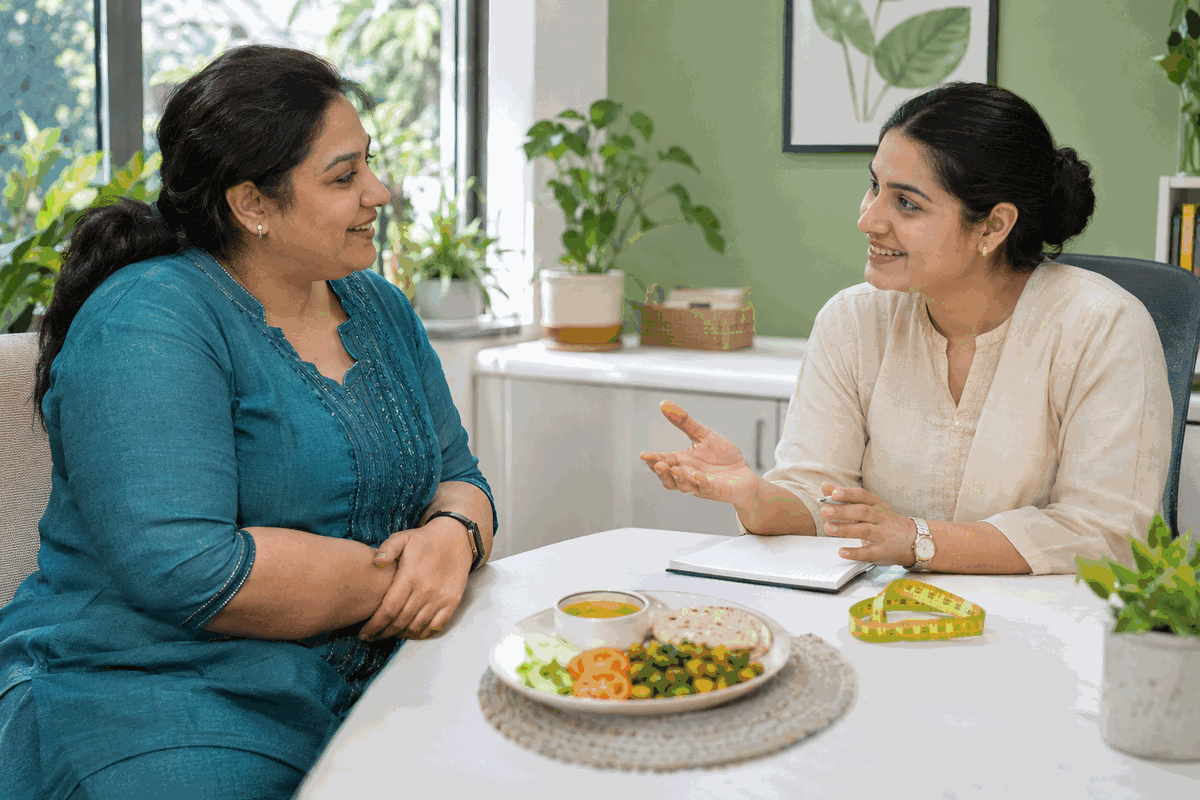
A sustainable eating plan needs to fit your nutritional needs, food preferences and everyday schedule. Instead of treating meals as a punishment, write down a few practical questions for your consultation: Which meals leave me hungry? When do I skip meals? What changes would be manageable at work or at home?
Bring a typical day's meals and drinks to your appointment. This gives the professional supporting you a concrete starting point for a personalised plan. A plan that requires constant disruption to family meals or your working day deserves discussion before you commit.
Make movement achievable
WHO recommends that adults aim for 150–300 minutes of moderate-intensity aerobic activity each week, or an equivalent amount of vigorous activity. Muscle-strengthening activity involving major muscle groups is recommended on at least two days a week. Some activity is better than none.
If you are currently inactive, begin with a manageable amount and increase gradually. Walking, cycling and other enjoyable activities can all contribute. Ask a qualified professional how to adapt activity if you have a long-term condition, pain or limited mobility. Progress should suit your ability rather than a challenge designed for someone else.
Choose support with a long-term plan
Weight management can include an individual eating plan, activity, regular follow-up and support with maintaining changes. In appropriate cases, a medical professional may discuss prescription treatment or referral for metabolic or bariatric care. These choices require assessment; they are not a substitute for an individual consultation.
Ask how progress will be reviewed, what support is available between visits and what happens if the first plan is difficult to follow. Safe care should make room for adjustments. Avoid treating a single weigh-in as the entire story, or buying a package before you understand the intended purpose, limitations and follow-up.
Body contouring and obesity treatment have different purposes
Non-invasive body contouring may address small, localised bulges or changes in body shape in suitable people. It does not treat obesity and does not provide the health benefits associated with weight loss. Results can vary and may be temporary; procedures also have risks.
If you are considering a contouring procedure, ask whether your main goal is appearance, weight management or health improvement. Discuss suitability, alternatives, risks and maintenance before deciding. Read about weight management and body contouring at Meadows, then arrange a consultation to clarify which route fits your concern.
A practical first step this week
- Write down your main health goal and the questions you want answered.
- Record a typical day's meals, drinks and activity for discussion.
- Choose one realistic change you feel able to repeat.
- Arrange a review with an appropriately qualified professional instead of relying on a rapid-transformation promise.
To plan a visit, find your nearest Meadows Wellness clinic and ask about consultation availability. Use the discussion to understand the next steps, rather than assuming a particular treatment is suitable.
This article provides general education and does not diagnose a condition or replace personalised medical advice. Image: AI-generated editorial illustration; it does not depict an actual Meadows patient or staff member.